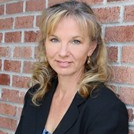
LIsa Black
Cape Coral, FL
Female, 49


I spent the five happiest years of my life in a morgue. As a forensic scientist in the Cleveland coroner’s office I analyzed gunshot residue on hands and clothing, hairs, fibers, paint, glass, DNA, blood and many other forms of trace evidence, as well as crime scenes. Now I'm a certified latent print examiner and CSI for a police department in Florida. I also write a series of forensic suspense novels, turning the day job into fiction. My books have been translated into six languages.
I don't watch the show, so I couldn't comment. But fiction is meant to be entertaining, and it's usually more satisfying to focus on one story at a time.
Share Answer: 

I think I am an expert in some areas of forensic science. I am not an expert in law, public safety policy or our political system.
Share Answer: 
"Touch" DNA or "Contact DNA" can obtain a profile from an item that someone merely touched: https://en.wikipedia.org/wiki/Touch_DNA
I would say Rapid DNA, which can provide a profile in less than two hours and used in the battlefield, but that's been around since 2014.
And though you've seen it on TV every day for 50 years, it has not been possible for the average latent print examiner to scan in a fingerprint and search every person who's ever been fingerprinted, including job applicants and military. Most databases would be just county or state wide, and may or may not include job applicants (or staff) depending on the preferences of the agency, and certainly not the military, ICE or Interpol. At my department we only got the ability to remotely search the FBI database last year.
Hope that helps!
Share Answer: 
Casino Dealer
 Do you find casinos to be depressing places to work?
Certified Nurse Aide
 What's it like going into a room in the morning to find someone dead?
Social Security Employee
 How do you check to see whether someone claiming disability is actually disabled?
I have a bachelor’s degree in biology from Cleveland State University. I didn’t have a minor.
Share Answer: 
They didn’t have forensics degrees when I went to school, so learned all the forensic tasks were on the job or continuing education courses. But the science background helps with understanding lab procedures, preparing reagents, and of course explaining what’s going on during the various processes.
Share Answer: 
I'm sorry but I've never worked in toxicology, so I've never tested drugs with any kind of test.
Sorry I can't help!
Share Answer: 
-OR-
 Login with Facebook
 (max 20 characters - letters, numbers, and underscores only. Note that your username is private, and you have the option to choose an alias when asking questions or hosting a Q&A.)
(A valid e-mail address is required. Your e-mail will not be shared with anyone.)
(min 5 characters)
By checking this box, you acknowledge that you have read and agree to Jobstr.com’s Terms and Privacy Policy.
-OR-
Register with Facebook(Don't worry: you'll be able to choose an alias when asking questions or hosting a Q&A.)



 Browse Jobs
 Host a Q&A
 Search

 Submit Your Question
 Host a Q&A

 Last 7

