
LIsa Black
Cape Coral, FL
Female, 49


I spent the five happiest years of my life in a morgue. As a forensic scientist in the Cleveland coroner’s office I analyzed gunshot residue on hands and clothing, hairs, fibers, paint, glass, DNA, blood and many other forms of trace evidence, as well as crime scenes. Now I'm a certified latent print examiner and CSI for a police department in Florida. I also write a series of forensic suspense novels, turning the day job into fiction. My books have been translated into six languages.
It all depends on where you want to work and what they require. At the coroner's office we all had at least a bachelor's degree in a natural science like biology, because there were not any forensic degrees then. If you want to be a DNA analyst you will probably need to major in genetics or biochemistry. At the police department where I work, with our very small lab, we are only required to have a high school diploma--but you get extra points in the interview process for advanced degrees so we all have at least a bachelor's.I don’t know how helpful medical technology would be because that is specifically geared toward a different profession.
Share Answer: 

Sure, I'll email you.
Share Answer: 
Take as many science and then math courses as you can.
Best of luck!
Share Answer: 
Bleach will also destroy DNA but of course that may damage items. Soap and water will do.
Share Answer: 
Border Patrol Agent
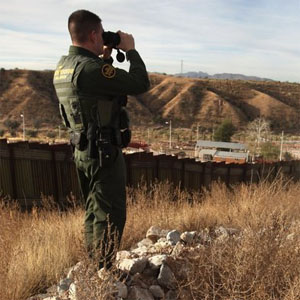 What's the most creative way you saw cartels getting drugs across the border?
Starbucks Barista
 Why does Starbucks attract so many homeless people?
Programmer
 Why are most developers socially withdrawn?
Because fingerprints, tire tracks, footwear impressions and sometimes handwriting can, with sufficient individual characteristics, be identified to a specific person or item. (Glass can as well in the case of a 'jigsaw' match, when it physically fits into a piece of evidence.) These analyses require human attention and thorough training and competency and are not quite as simply done as adding a blood sample to a thermocycler for DNA analysis. Explaining DNA analysis takes a highly trained analyst but the actual process is largely automated.
Share Answer: 
Good question. If the surface isn't disturbed and the temperature and humidity are cool and steady, I know fingerprints can last indefinitely, so I suppose skin cells would last as well.
Share Answer: 
I'm sorry but I've never worked in toxicology.
Share Answer: 
-OR-
 Login with Facebook
 (max 20 characters - letters, numbers, and underscores only. Note that your username is private, and you have the option to choose an alias when asking questions or hosting a Q&A.)
(A valid e-mail address is required. Your e-mail will not be shared with anyone.)
(min 5 characters)
By checking this box, you acknowledge that you have read and agree to Jobstr.com’s Terms and Privacy Policy.
-OR-
Register with Facebook(Don't worry: you'll be able to choose an alias when asking questions or hosting a Q&A.)



 Browse Jobs
 Host a Q&A
 Search

 Submit Your Question
 Host a Q&A
 Last 7

