
LIsa Black
Cape Coral, FL
Female, 49


I spent the five happiest years of my life in a morgue. As a forensic scientist in the Cleveland coroner’s office I analyzed gunshot residue on hands and clothing, hairs, fibers, paint, glass, DNA, blood and many other forms of trace evidence, as well as crime scenes. Now I'm a certified latent print examiner and CSI for a police department in Florida. I also write a series of forensic suspense novels, turning the day job into fiction. My books have been translated into six languages.
Yes, about 60 times, and I may be going again this week. It's one of those 'doesn't rain but pours' kind of things. I might go twice in one week and then not again for months. It's incredibly frustrating, time-consuming, nerve-wracking and super not fun. You have no control over anything, not when you have to be there, not how long you have to be on the stand, not what kind of questions you'll be asked, and you get no warning of any of these things beforehand.
Share Answer: 

it is always helpful to know what will give a false positive result. Hemastix will also react with a few other substances, such as vomit for one. That's why it's called a prelimary test and not a confirmatory test. Good job!
Share Answer: 
Take all the science courses you can and any kind of forensic-oriented laboratory courses.
Share Answer: 
We have worksheets or notebooks that we use to make notes at the scene, and we have worksheets that we sometimes use in the lab if we want to. Then the 'official' report, which is usually fairly simple, is typed into our computer system so that everyone in the department can view results or print it out for the attorneys. It will outline everything we did and any results obtained.
Share Answer: 
Social Security Employee
 Did the US economic collapse cause a surge in disability applicants?
Fashion Model
 Do you feel objectified when you're standing around in skimpy outfits?
Nail Technician
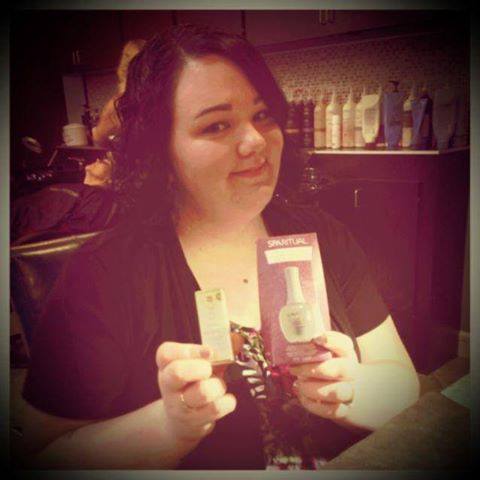 How sanitary are the pedicure basins really?
Yes, take all the science classes you can and try to visit local labs to see what the job is really like.
Share Answer: 
Just as a guess, it seems to me that molecular biology and sociology are pretty far apart, career-wise. With molecular biology I would expect you to go into DNA or some other kind of specialized analysis--which would be fabulous, but I doubt that you would also be doing crime scenes. My question is, would you like to work mostly in a lab or mostly at crime scenes? If mostly in a lab, then I think you are on the right track. The best way to know is to contact places you would like to work and ask them what their requirements are. Go for a tour if you can. This is also a great way to network and meet people. But most importantly, every agency will have different preferences based on their functions and positions. Best of luck!!
Share Answer: 
I couldn't tell you the exact chemistry, but it reacts with the iron present in hemoglobin to indicate blood. However it also reacts with other oxidizing agents such as copper and horseradish. Unlike what you see on TV, we don't spray luminol and then use a UV light or some such thing. We make the room as dark as possible, spending a lot of time taping material over windows and door cracks and 'ready' lights, then spray the luminol.or Bluestar. It will glow on its own without any additional equipment, and won't last long. It can be photographed but that's a bit of work. It won't stain or harm anything.
Share Answer: 
-OR-
 Login with Facebook
 (max 20 characters - letters, numbers, and underscores only. Note that your username is private, and you have the option to choose an alias when asking questions or hosting a Q&A.)
(A valid e-mail address is required. Your e-mail will not be shared with anyone.)
(min 5 characters)
By checking this box, you acknowledge that you have read and agree to Jobstr.com’s Terms and Privacy Policy.
-OR-
Register with Facebook(Don't worry: you'll be able to choose an alias when asking questions or hosting a Q&A.)



 Browse Jobs
 Host a Q&A
 Search

 Submit Your Question
 Host a Q&A
 Last 7

